


Urgent action
Our strategy



2025 marks a very special milestone: the 30th anniversary of the charity. To celebrate the history of the organisation, the story behind the charity’s founding, and to reflect on some of the key initiatives and impact over the last 30 years, we have launched a new history timeline.
This impact report outlines the work we have done during the most recent academic year to further our mission. It covers the third year of delivery against our 2022-2035 strategy ‘Inspiring Changemakers, Building Belonging’, the period from September 2024 until August 2025.
You can read more about the work we have been doing against each of the three core objectives of our strategy, and how we have been laying the foundations for the next phase, below.



*These figures exclude the young people participating in the School Games programme (where demographic data is not available) and the young people participating in The FA Girls Football programme, where the intentional gender-based targeting skews data significantly.
** In the academic year 2024/25, Youth Sport Trust has changed the way we measure deprivation. We no longer asked about ‘Free School Meals’ and instead captured eligibility for Pupil Premium (England), Pupil Development Grant (Wales) or Pupil Equity Fund (Scotland).

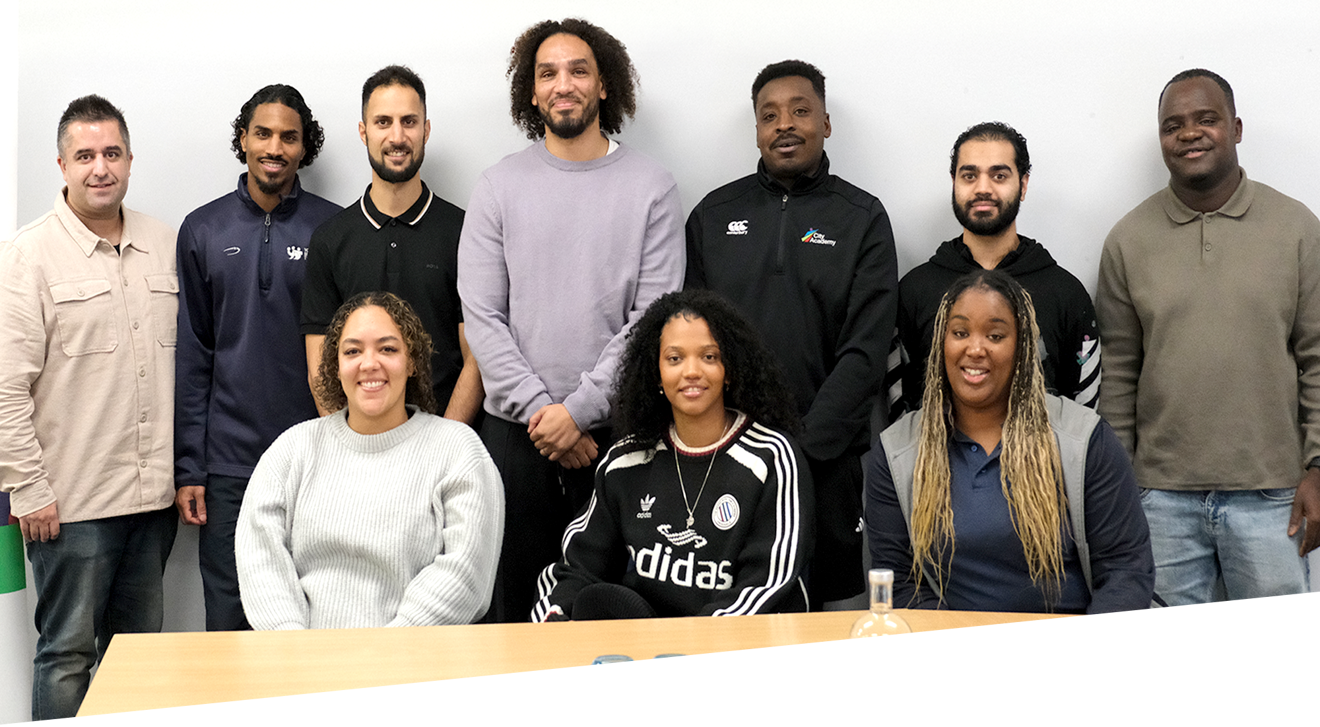
Alongside recognising the need for our own workforce to change to better represent the communities we serve, we know that representation within the PE and sport workforce in schools also needs to change.
The latest School Workforce data published by the Government in September 2025 shows that 91.8% of headteachers in England in the 2024/25 academic year were White British in comparison to 71.8% of the working-age population. In addition, research from the National Foundation for Educational Research into Racial Equality in the Teacher Workforce found that Asian, Black, Mixed and Other ethnicities are considerably under-represented in the PE teaching workforce. In PE, teachers from a White ethnic background are overrepresented by 16%, meaning PE has the least diverse workforce alongside Geography, Art, Design, Music and Drama.
In response, the Youth Sport Trust launched the Leadership Development Programme for PE Leaders from ethnically diverse communities. The programme consists of tailored CPD and is supported by industry experts to achieve the following outcomes:
Read more about one practitioner's reflections on the programme and the critical importance of representation in PE.
The Set for Success programme is an intensive youth leadership initiative funded by the Wimbledon Foundation, in partnership with Barclays, and delivered by the Youth Sport Trust.
The programme seeks to support young people at risk of not achieving their full potential. Through a series of sessions delivered by inspirational athlete mentors and teachers, active learning and sport, it supports participants to improve their life and employability skills, their engagement and behaviour at school, and their attitudes towards the future.
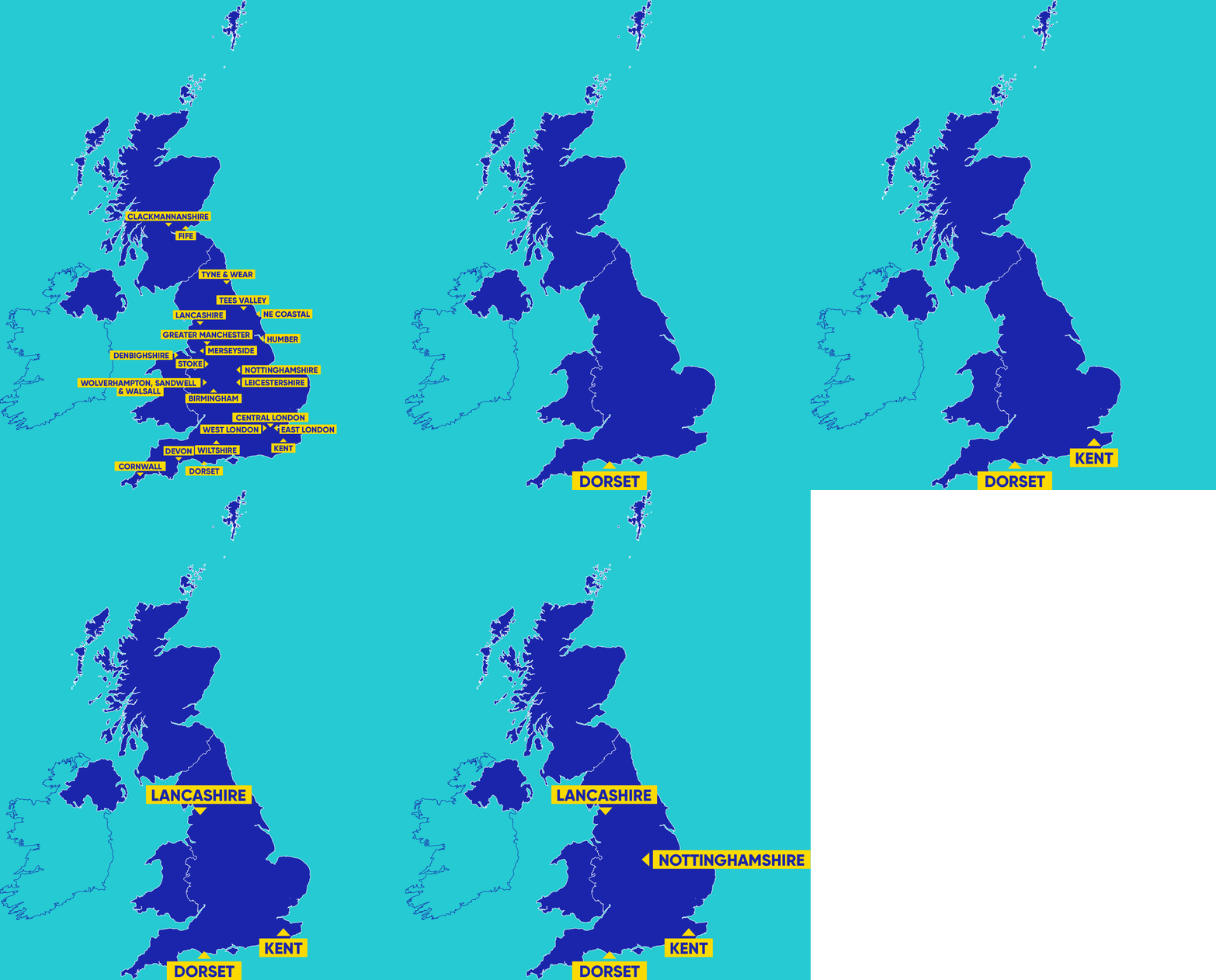
During the 2024/25 academic year, 81 schools were engaged in the programme, reaching 1,274 students across 15 areas in the UK where a need for targeted support had been identified. 52% of young people on the programme were from low-income families, and 34% had additional support needs.
As a result of Set for Success, 78% of young people feel better about their future, and 82% now know more about how their skills can help them in the future. 77% of teachers reported that the programme had improved the attendance of the young people involved, and 80% of teachers agreed it had helped student engagement with school.
Developing a Set for Success social action project enabled Regan to find his voice and educate teachers about his stammer, leading to Regan winning the Youth Sport Trust Young Changemaker Awards 2025 Greatest Turnaround Award. Read the full programme evaluation for 2024/25 here.
Olivia loved sport but she had never really enjoyed school. Her dyslexia meant that she found learning a challenge, she lacked confidence in her ability to do her schoolwork, and she felt that she had a poor relationship with her teachers. In Year 8, Olivia became a school refuser, which meant she avoided going to school. Olivia stayed at home for weeks on end, and her attendance rate fell to 75%.
Olivia was offered the opportunity to take part in Set for Success; she started to come back to school to be part of the programme. During Year 9, her attendance rose to 84%, an increase of nine percentage points compared to the previous year. Since finishing Set for Success, her attendance has continued to be much better. Set for Success helped Olivia to develop better relationships with school staff and her peers, which helped to improve her experience at school.
“Set for Success definitely helped her to go to school more.” - Olivia's parent
The 2025 Netflix hit drama Adolescence brought into sharp focus the current scale and severity of challenges regarding a digitally fuelled culture of violence, misogyny and toxic masculinity among some young boys.
Boys Move, by the Youth Sport Trust, is a professional development programme designed to equip educators with the principles of how to use sport and play to address the mental health and behaviour issues of adolescent boys, improve their wellbeing, challenge their perceptions and engage them with school.
Since the start of our new strategy, 72 schools have participated in the programme. 73% of practitioners trained agreed that Boys Move had helped improve participant behaviour at school, and 84% agreed it had improved the boys’ engagement with school.
Programme participants agreed that the programme has improved their happiness (92%) and how connected they felt towards others (77%).
It is our ambition that every secondary school in the UK has a male role model trained in leveraging the vehicle of sport to support adolescent mental health. Find out more about the Youth Sport Trust Boys Move programme.
“Jack* started rearing his head a lot after we had to send our biggest hitter to an alternative provision, as if he was trying to be the new alpha. This was parallel to issues between mum and dad, who had split up. A lot of his behaviours were explosive and out of proportion to the incident, and he was often very remorseful, suggesting it was cries for attention rather than malice.
“Boys Move allowed him to channel this energy better and become more reflective on his actions. Mostly though, I think the sport gave him an escape and the gardening gave him a purpose and something to care about in school […] He was also very good at using the composure room. This idea came from young offender prisons; it is basically a sensory reset room where children who cannot regulate go to reset and then return to lessons.”
*Jack’s name has been changed to protect his identity.
Generation Charnwood is a collaboration between local educational establishments, employers and community partners in the borough of Charnwood, Leicestershire. It aims to develop the wellbeing, life chances and employability skills of young people within the borough, particularly those perceived to be most in need, to develop a ‘workforce for the future’.
The programme is funded by the UK Government through the UK Shared Prosperity Fund and is delivered jointly by the Youth Sport Trust and Active Together. It supports young people across three phases: in primary school where children are taught life-skills in PE and attend enrichment clubs, secondary school where the focus is on targeted mentoring and social action, and post-16 education involving work placements, apprenticeships and internships.
4,890 young people participated in the programme, and 226 were trained as young leaders. Of those who participated, 40% were from low-income families and 56% from ethnically diverse communities. Following engagement with the programme, teachers agreed that the young people have improved levels of engagement with school, and improved both life skills and life chances.
Amy saw the opportunity to become an enrichment club leader for a primary school as the perfect chance to develop her coaching skills whilst studying at Loughborough University. She wanted to use the training provided to support the younger generation within her new community.
Amy supported the young pupils in her club to get them physically active in a relaxed and enjoyable manner, keeping the pupils engaged and enthusiastic. Thanks to Amy, the pupils embodied the club’s values through non-traditional activities, embracing life skills such as self-confidence. Amy continues to be an enrichment club leader for Generation Charnwood and is thankful for the beneficial connections she has made with the Youth Sport Trust.
The Major League Baseball (MLB) First Pitch programme, delivered in partnership with MLB and BaseballSoftball UK, uses the sport of baseball as a tool to get young people interested in and engaged in physical activity. Schools are provided with fun and inclusive resources to help spark an interest in physical activity and sport through learning how to play baseball and developing basic skills.
In 2025, 272 schools participated, with 84% of pupils feeling more confident to take part in sport and physical activity and 79% feeling more resilient as a result of taking part in the programme.
One of the schools that participated was Watergate School in Lewisham. Watergate is a special school for pupils aged 4-11 years-old with severe learning difficulties and complex needs, with several children having an additional diagnosis of autism.
Watergate School wanted to get involved in the MLB First Pitch programme as the PE lead teacher felt passionate about showing that their children can participate in mainstream sport. The programme offered the school the opportunity to take part in a completely new sport and, by doing so, to demonstrate that anything is possible for their young people.
Reflecting on the impact, the PE lead at Watergate highlighted that at the start of the programme, there was one child who was using a walking frame and struggled to turn around the bases. The programme helped this child to get more control of his walking frame. Another girl struggled to keep her arms steady and in one place, and the programme helped her to develop her ability to grip and push objects by keeping her hands on a bat. Moreover, a couple of wheelchair users refined their self-propelling skills by moving around the bases, and other children developed their ability to raise their heads.
Well Schools was originally launched in 2020, as a response to the long-term impact of the Covid-19 lockdowns on the health and wellbeing of a generation. The initiative focused on creating a community of educators who believed that prioritising happiness and health of both staff and students would lead to better outcomes for children and young people.
Youth Sport Trust Well Schools was relaunched at the Youth Sport Trust Conference 2025 with a renewed focus to place wellbeing at the heart of whole school improvement. The refreshed framework built around four Well Schools pillars, each with five steps to success, was developed alongside practising education experts, grounded in real-world impact, to help the education sector understand what works to achieve positive education outcomes by addressing the health and wellbeing challenges they face.
The relaunch was supported by representatives from the first five Beacon Well Schools who shared their experiences of integrating wellbeing into their whole school approach.
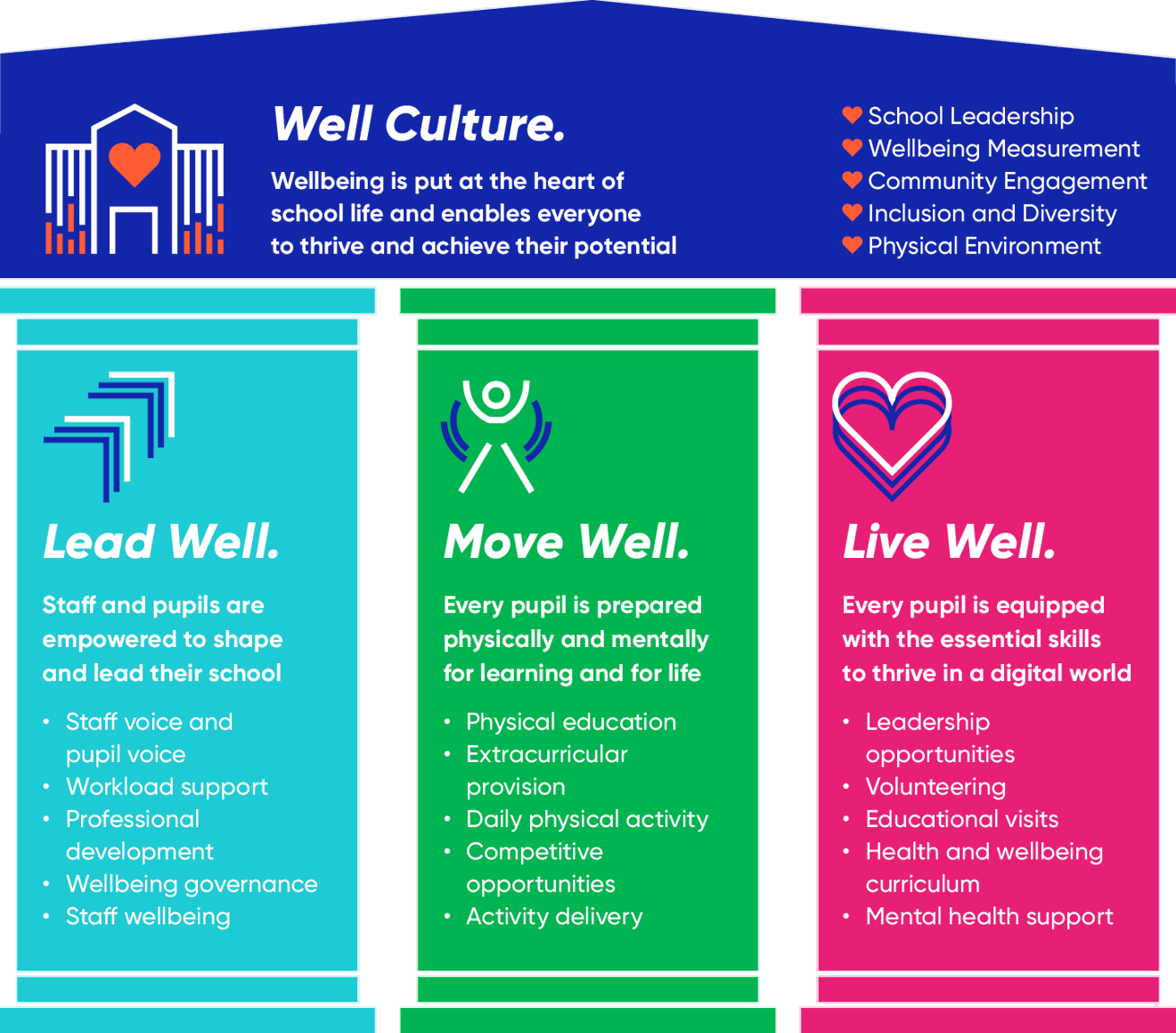
Towards the end of the academic year, we launched the Well Check. A free-to-access self-review tool that helps schools assess their current level of provision across the four pillars and corresponding steps to success. Within the first term of launch, over 374 schools had completed the Well Check and were in receipt of a tailored action plan to aid them in improving their provision.
During the next academic year, we will launch the Youth Sport Trust Well Schools accreditation scheme, which, following on from the Well Check, will allow schools to be officially recognised as a Youth Sport Trust Well School, following an evidence submission and review by a peer reviewer.
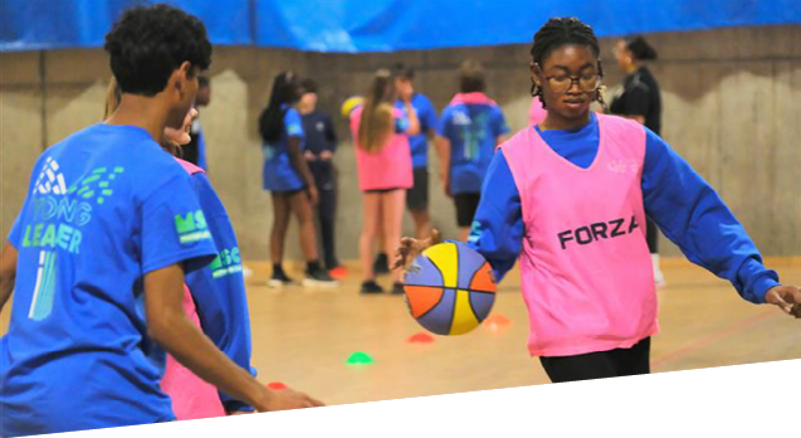
Youth Sport Trust Multisport Youth Clubs were launched in the 2023/24 academic year to transform the co-curricular/enrichment sport offer in secondary schools by moving away from single-sport, selection-led models towards inclusive, youth-led multisport environments, empowering young people aged 14-17 years-old to lead activity for younger peers.
The 2024/25 academic year saw the initiative grow with 115 new young Multisport Club leaders trained across 24 schools, who have led club activities for 454 participants.
Young leaders were specifically encouraged to use the clubs strategically to engage those young people who may benefit the most due to a lack of access to sport outside of schools. 39% of young leaders were trained, and 48% of participants were from low-income families.
82% of young people who participated in the clubs agreed they felt more connected to others and 86% agreed that the clubs increased their overall enjoyment of taking part in physical activity.
In April 2025, almost 100 young people attended the Youth Sport Trust Young Leaders camp at Dearne Valley. The principles of Multisport Clubs were shared at the camp, and young leaders were able to participate in a packed and inspiring programme designed to develop their confidence, leadership skills, and teamwork. The camp offered a blend of practical and reflective workshops, including communication and empathy, responsibility and problem solving, planning and delivery, and an introduction to the SMILES and STEP principles - key frameworks for creating inclusive, engaging physical activity sessions.
89% of camp attendees agreed that the experience helped improve their confidence as an activity leader.
Young Ambassadors is a national movement active across Scotland, England and Wales and designed to empower young leaders to influence and inspire others through physical activity to create positive and meaningful change, build friendships and improve wellbeing.
The initiative aims to support young leaders, enhancing their skills and confidence so that they can advocate for an active, healthier nation and lead community activities which build belonging and tackle inequalities. The movement is led by the Youth Sport Trust. In Wales, it is funded and supported by Sport Wales and the National Lottery. In Scotland, the programme is funded by the National Lottery and run alongside sportscotland.
In England, the programme was relaunched in the 2023/24 academic year with an initial 90 Young ambassadors trained. Over the last year, a further 248 Young Ambassadors in England have received training, and the Youth Sport Trust is actively seeking funding to scale the programme further.
3,900 ambassadors were also trained in Wales, with each spending on average 6.2 hours a month volunteering. In total, Young Ambassadors Wales delivered activities for 97,369 participants across 794 schools.
Local authority programme leads agreed that the programme had a positive impact on young people’s confidence and enjoyment of taking part in sport and physical activity. They also agreed that the programme improved young people’s leadership skills and the use of youth voice to co-design activities.
Since becoming a Young Ambassador Cymru at the age of 10, Ethan has developed into a Platinum ambassador and is a role model for his inclusive approach to mentoring and officiating, particularly when leading community basketball events. Ethan won the Youth Sport Trust Young Changemaker Awards 2025 Young Activist Award.
Lidl Sport for Good is a programme run by Lidl Northern Ireland in partnership with the Youth Sport Trust to promote positive mental health and increase engagement in physical activity. The programme is delivered by Youth Sport Trust athlete mentors alongside a cohort of student mentors.
The programme aims to improve students' resilience, self-esteem and confidence, and also provides sporting equipment to participating schools.
Over the last academic year, 425 young people from 28 schools were trained to be student mentors. The trained student mentors supported 1,415 vulnerable students via peer-to-peer groups.
Mentors agreed the programme had a positive impact on their ability to motivate others (77%), teach others new things (79%) and form relationships built on trust (65%). Mentees in the peer-to-peer groups agreed that the programme helped them feel more optimistic about their future (64%) and improved their sense of belonging to their school (52%).
Teachers from the participating schools felt that the programme improved young people’s resilience (95%), happiness (100%) and connectedness to others (100%).
One of the schools involved in the programme was the City of Armagh High School, which got involved in the project as they felt that using the mentors was a great way to make the programme sustainable.
“The mentors delivered a sports fun day with a healthy break included. The fruit pots for each child were prepared by the sports mentors. The day consisted of nerf war, gym challenge, dodgeball and a team-building exercise, and the children rotated around the four stations.
“The principal was so impressed that she would like it to be a permanent fixture on our school calendar for other pupils to participate in. The idea of a new buddy system in school has been thought about as well. Mentors will be leading some activities for an upcoming P6 Activity Day and will use their knowledge gained through this programme with the primary school pupils.
As highlighted in Paralympics GB’s Equal Play campaign, only 25% of young people with SEND are regularly participating in physical education and school sport, with 1 in 3 disabled children taking part in less than 30 minutes of sport and physical activity per day during term time.
The Youth Sport Trust is committed to ensuring that all young people can experience the benefits of PE, sport and play, particularly those who are most likely to benefit both mentally and physically. Analysis we published with State of Life found that the wellbeing impact of physical activity at school was almost double for those children who are disabled and/or receiving Free School Meals than those who aren’t.
May 2025 saw the Youth Sport Trust successfully secure the Department for Education Inclusion 2028 contract to lead a consortium of partners to improve access to PE and school sport for pupils with SEND.
Inclusion 2028 builds on the successful delivery of Inclusion 2020 and Inclusion 2024, the latter of which delivered the following outcomes over the last three years:
Inclusion 2028 aims to:
School Standards Minister, Catherine McKinnell, said:
“Sport has the unique power to break down barriers, build confidence and foster a sense of belonging.
“Inclusion 2028 will ensure young people experience the benefits of sport and physical activity, from improved mental wellbeing and teamwork skills to greater resilience.
“By building a generation of teachers with the skills and confidence to deliver high-quality PE and school sport for all pupils, we can ensure that every child gets their chance to shine.”
Emily won the Youth Sport Trust Young Changemaker Awards 2025 Young Health Champion Award after attending a Lead Inclusion School and becoming involved in Inclusion 2028.
The Inclusive Health Check is a free, online self-assessment tool embedded within the School Games programme, funded by Sport England, Department of Health and Social Care and Department of Culture, Media and Sport, and endorsed by the Department for Education. It helps schools reflect on whether their school sport and physical activity provision is truly inclusive for pupils from under-served communities.
By completing the Inclusive Health Check at least annually, schools can track improvements in inclusive practice and generate measurable evidence to support internal development and external reporting. Sections can be revisited and updated at any time, providing flexibility for ongoing review.
To complete the Inclusive Health Check, schools are asked a series of questions to assess their inclusive practice, which have been co-created with expertise organisations striving for equality, including Women in Sport, Sporting Equals and Activity Alliance. After rating their confidence in supporting specific groups, schools receive tailored resource suggestions to create an action plan to guide next steps.
Completion of the Inclusive Health Check is also a mandatory part of the School Games Mark application, contributing to achieving a School Games Mark award. During the last academic year, 8,279 schools completed an Inclusive Health Check. You can read more about the Inclusive Health Check and the impact it is having on provision.
Mason won the Youth Sport Trust Young Changemaker Awards 2025 Inspirational Inclusive Young Leader Award after participating in the Inclusive Youth Leadership Camp.
Schools Games is funded by players of the National Lottery through Sport England, the Department for Health and Social Care and the Department for Culture, Media and Sport.
Through its ten guiding principles, the School Games aims to:
During the 2024/25 academic year, 24,063 events were delivered across the School Games network, providing 2,127,485 participation and leadership training opportunities. Read more about the reach of this programme over the last academic year.
Last year, School Games Organisers submitted 219 best practice case studies outlining how they have been delivering against the School Games pledges to tackle inequalities, create positive experiences and embed youth voice as outlined below. Here we have chosen to share just three of these to showcase the amazing work that is happening across the network.
The Sedgefield School Games Organiser Area partnered with the North East Autism Society (NEAS) and Evergreen Primary to create leadership opportunities for autistic and neurodivergent young people. After completing workshops on the Youth Sport Trust STEP principles, three NEAS students designed and delivered a small multi-skills festival for visiting primary schools. They set up activities, demonstrated each game and supported pupils individually - many leading for the first time.
Evergreen pupils “loved working with the big boys,” and staff praised the calm, flexible environment and positive social connections. NEAS teachers described the day as transformative, noting significant boosts in confidence, particularly for students who are usually quiet or anxious.
The impact extended beyond the event: two leaders later supported a larger Year 3 festival, independently running stations, volunteering for new roles, and showing remarkable growth in communication and self-belief. This partnership has opened the door to sustained leadership pathways and deeper collaboration, proving that with the right support, every young person can shine.
Read more about the impact of the festival.
Faced with a limited understanding of physical literacy, the Waterhead Academy School Games Organiser Area worked with primary school staff - teachers, teaching assistants, midday supervisors - to reawaken their own memories of movement and help them recognise how everyday activity can bring joy and belonging. Through free staff-training inset sessions, schools thought differently about play: rather than “just PE,” movement became a chance for all children (especially the least active) to connect, learn and move more often.
At each session, staff plotted their life’s relationship to movement and explored how to build inclusive, meaningful physical experiences. Over time, 11 schools and over 100 staff were trained, potentially reaching over 2,000 pupils. The approach built confidence in midday supervisors and made movement feel fun and meaningful again, engaging more young people as a result.
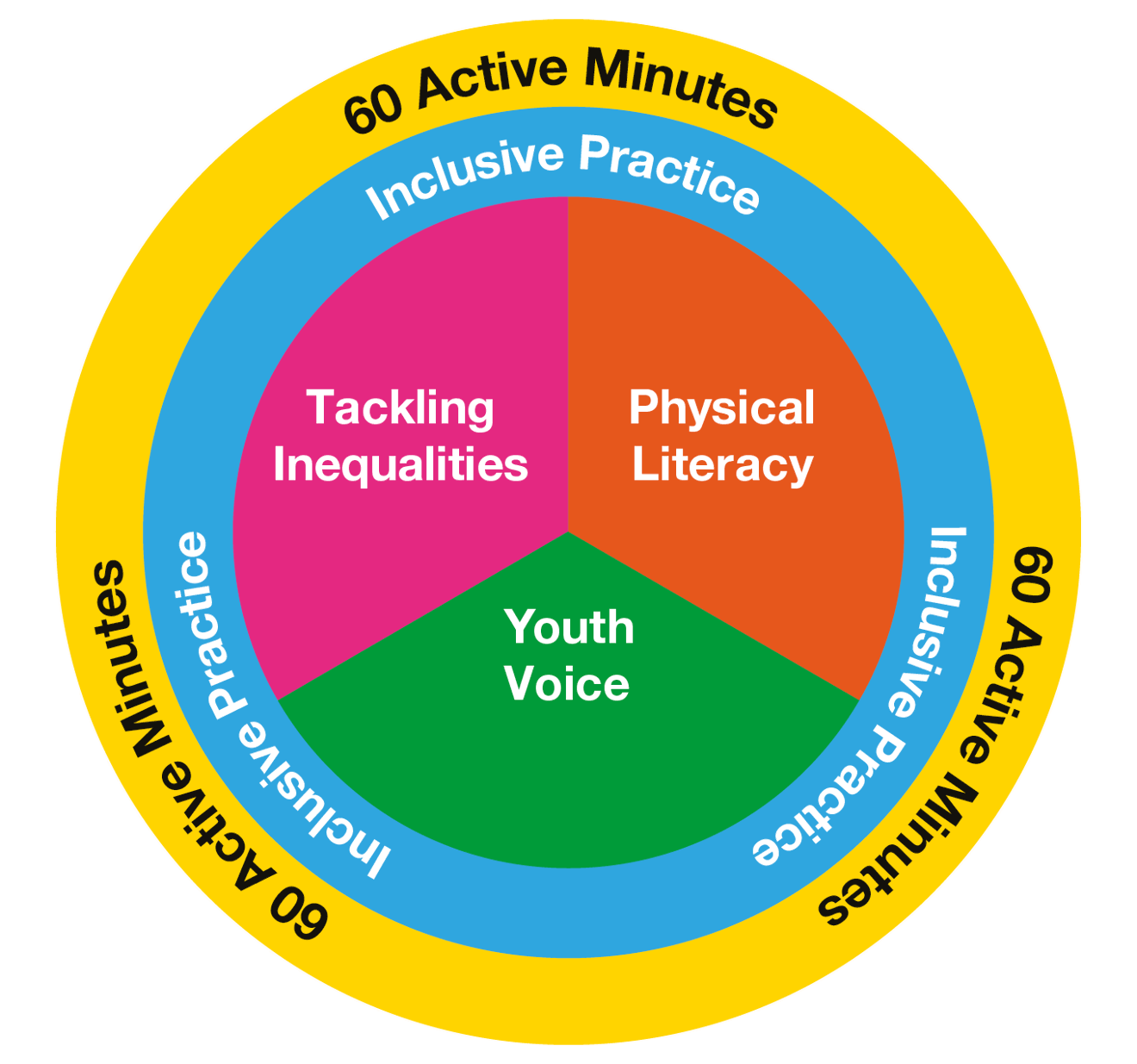
Where once physical activity felt optional or complicated, it is now becoming a valued, embedded part of the school day, contributing to the Chief Medical Officers’ 60 active minutes recommendation - promoting wellbeing, inclusion and a culture where movement belongs to everyone.
Find out more about these staff-focused training sessions.
The Harris Academy Merton School Games Organiser Area launched a Pupil Voice project to understand the experiences and needs of 250 Key Stage 2 students, including those less active or from under-represented groups.
Across 43 primary and three special schools, children shared their views on PE lessons, sports events, and extracurricular activities, highlighting barriers such as unsafe behaviour, limited choice, and fatigue, alongside what they enjoy most, including fair teams, fun warm-ups, and sports including tennis, dodgeball and basketball. This feedback was collected via in-person focus groups, with pupils selected by PE Coordinators to take part in the Pupil Voice sessions.
The insights informed the School Games Organiser's planning, helping schools enhance PE delivery, increase inclusivity, and design safer, more enjoyable events. Children reported feeling valued and proud to have their voices heard, while staff reflected on curriculum improvements.
The Merton School Games Organiser is now developing training, resources and event planning to address inequalities, support girls’ participation, and expand opportunities.
This project demonstrates how meaningful youth engagement, when we create the right space, voice, audience and influence, can directly improve provision, build confidence and foster a lifelong love of physical activity for all children.
Read more about what this pupil-led offer achieved.

9,462 schools achieved a School Games Mark in 2025, with 5,563 schools (58%) achieving a Gold - up from 5,264 schools in 2024. Overall, the award saw a 6% increase in applications over the last academic year, with a 10% increase in applications from secondary schools.
In order to achieve a Gold mark, schools must ensure that they are delivering at least 30 active minutes per day and tracking physical activity levels outside of school for more than 50% of pupils to facilitate targeting of support to the least active pupils. The school must also provide equal opportunity in both curricular and extracurricular activities, regardless of gender.
The uplift in Gold School Games Mark awards means 299 more schools are now meeting this and other criteria, aimed to increase the quality of provision.
Find out more about the School Games Mark criteria.
Blessed Trinity School Games Organiser won the Personal Development and Youth Voice Award at the 2024 School Games Impact Awards for their work in creating positive experiences for young people attending Alternative Provision settings in the Burnley area.
Watch this short video to see how they used student agency to develop inclusive and engaging physical activity opportunities.
Read more about all the Impact Award winners.
Released on International Day of the Girl, our 2024 Girls Active Annual Survey funded by Sport England National Lottery Funding, compiled insight on attitudes and perceptions of PE and school sport from over 15,000 girls and boys aged between 7 and 18.
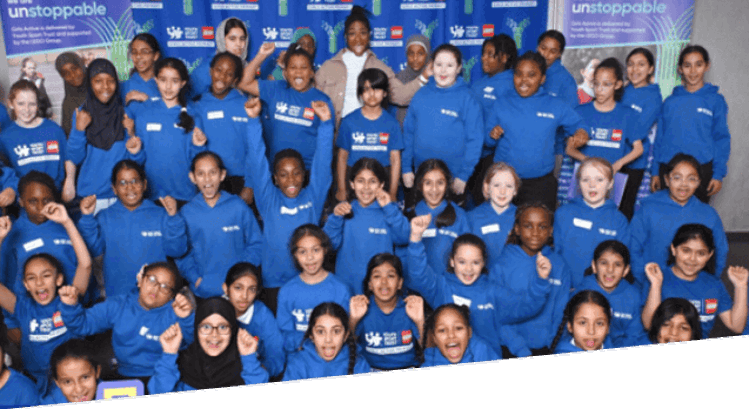
Examining the persistent activity gap that exists between the genders, the survey found that the number of girls enjoying PE drops dramatically throughout school life, as does their confidence. These drops align with the typical age for the onset of puberty.
During the end of 2024, with funding from the LEGO Group, we expanded the Youth Sport Trust Girls Active programme into primary schools for the first time, training 46 teachers and 256 girls to be Girls Active Leaders via a series of inspirational events in London, Manchester and Newcastle.
93% of Girls Active Leaders reported improvements in their confidence to take part in and enjoyment of taking part in sport and physical activity, while over 80% reported improvements in leadership skills, including communication, problem solving and ability to acknowledge other people’s needs.
Funded by Barclays and The FA and delivered by the Youth Sport Trust, Barclays Girls’ Football in Schools is a framework delivered locally by a national network of local partnerships and tailored programmes, working to achieve the ambition that every girl will have equal access to football in school.
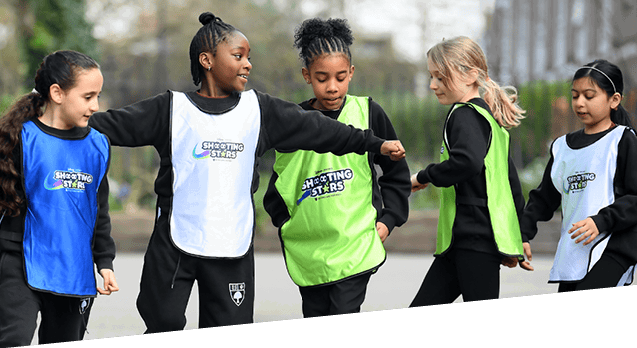
Over the last academic year, the number of strategic lead hub sites has increased from 300 to 311, with 20,434 schools reached by the programme. 2,149 girls were trained to be girls' football activators through the Barclays Game On - GO Lead programme, with 77,966 girls participating in Barclays Game On-inspired curriculum lessons. This is alongside other initiatives such as the Disney-inspired Shooting Stars primary programme.
In 2025, 90% of schools in England with Key Stage 2 and/or Key Stage 3 provision were delivering equal access to girls to football within the curriculum, up from 88% in 2024. Since 2020, the number of girls attending schools with equal access has risen significantly to 2.6 million (an increase of 31% since 2020/21). Read more about the progress being made against equal access here.
The Barclays Girls’ Football in Schools Strategic Leads for King Edward VI Aston and Hall Green won the 2025 Strategic Leads Award for Outstanding Contribution to Diversity. Watch this short video to learn more about the inclusive multi-cultural competition they ran in celebration of the Women’s Euros.
The Youth Sport Trust are working with School Rugby Managers as part of a wider partnership with the Rugby Football Union to grow the sport in schools across England to introduce rugby to 5,000 new state primary and secondary schools by 2027. With girls now making up an average of 45% of participants, the 2024/25 programme is already delivering significant results:
Examples of great practice within the programme include partners working to break down cultural barriers to access. One Schools Rugby Manager in Leicester took proactive steps to address cultural sensitivities and participation barriers among students from Muslim faith schools, including adapting the rules so participants could wear a tag belt, avoiding physical contact at a mixed gender event while ensuring equitable participation.
To further address barriers, a Year 7 girls-only T1 Rugby Event was held. The event was attended by six schools, including an all-girls Muslim faith school and involved 44 girls, 30 of whom were from ethnically diverse communities. The event served as an introduction to rugby for many of the girls involved.
The Lidl #SeriousSupport programme is funded by Lidl in partnership with the Ladies' Gaelic Football Association and delivered by the Youth Sport Trust. The programme uses Ladies Gaelic Football as a vehicle to increase and maintain girls’ engagement in sport and physical activity.
Over the last academic year, 26 schools were engaged in the programme, and 721 girls participated. Of those, 94% reported that they now feel more positive towards being active, and 88% of girls agree that their awareness of the positive values from being active has increased.
The Youth Sport Trust’s Research and Insight team are at the forefront of evidencing the societal impact of PE, sport and play so that all young people can access its life-changing benefits. In addition to directing and sharing new research, we work with partners across the sector to source, translate and magnify the research of others to drive systemic change.
As part of our campaigning work, we commissioned YouGov to collect views on the Always Active Uniform policy. The research shows that the majority of both primary school parents and teachers are supportive of a more flexible, activity-friendly school uniform. We continue to work with both national and international partners and academics to continue to build a compelling evidence base for Always Active Uniform, supporting cross-sector advocacy in this area.
The Youth Sport Trust’s latest annual PE and School Sport Report highlighted the issues facing children and young people today and the importance of taking urgent action. Including new research we conducted with teachers, parents, children and MPs, it continues to be a valuable source of evidence for use across the sector, alongside our Knowledge Bank and factsheets. This year’s launch was supported by a webinar, giving an additional accessible way for a broader audience to engage with the work.
Supported by Sport England System Partner funding, the Youth Sport Trust continues to build and facilitate the PE and School Sport Research Forum: a network of researchers, academics, charities, government officials and practitioners working together to share and mobilise the latest evidence and best practice across the sector. Youth Sport Trust researchers also contribute to several advisory boards, sharing our evidence and expertise to shape significant research projects, improve delivery and best practice, and drive policy change.
With a change of government providing new opportunities to influence policy, we continued to advocate for every child to have an active start in life, building on the ideas put forward in our 2024 manifesto.
On World Children’s Day, our National School Sport Champion Sir Mo Farah and other leading athletes wrote to the Prime Minister calling for change, before joining Culture, Media and Sport Secretary Lisa Nandy to discuss the importance of physical activity. We were delighted that a few months later, the Prime Minister announced the introduction of a new PE and School Sport Partnerships Network, responding to the call from across our sector.
Engagement around the Children’s Wellbeing and Schools Bill included highlighting the potential for free primary breakfast clubs to deliver enrichment, and for schools to consider introducing Always Active Uniforms. We responded to consultations, including the Curriculum and Assessment Review, on reforms to Ofsted and ahead of fiscal events, reiterating our call to protect investment and securing continuation of the Primary PE and Sport Premium and School Games Organisers Network.
We were joined by School Standards Minister Catherine McKinnell at Labour Party Conference and to launch the Inclusion 2028 programme, had Sport Minister Stephanie Peacock backing National School Sports Week at our Parliamentary event, and our Schools Director Kay Batkin accompanied Wes Streeting, Secretary of State for Health and Social Care, on a visit to a school. Other activities included a Parliamentary drop-in to promote Girls Active alongside The LEGO Group, and speaking to MPs and Peers as part of the National Sector Partners Group.
We used our insights to inform debates in Parliament, and our Chief Executive joined Athlete Mentors in giving evidence to the Culture, Media and Sport Committee’s inquiry on school sport. Putting youth voice at the heart of our advocacy, we encouraged responses to inform the National Youth Strategy and supported a member of our Youth Board to participate in a deep dive on sport alongside our Chief Executive.
Our work has helped elevate children’s physical activity as a political priority, and we are excited to see how this manifests in policy development in the coming months.
National School Sports Week 2025 was all about promoting how schools can embed opportunities for movement throughout the school day by taking an Always Active approach.
2,183 schools signed up to participate in the week, which saw events taking place up and down the length and breadth of the UK, facilitated by our Youth Sport Trust Athlete Mentor team alongside the Youth Board and our team leaders.
Powered by Sport Direct x Under Armour, the campaign also championed the principle of an Always Active Uniform as a way to remove barriers to movement created by traditional uniforms and formal footwear - particularly for girls.
Across the year, we hosted three online forums plus an in-person Summit, along with the leadership of three Action Groups focused on physical literacy, youth voice and workforce development.
Key progress has been made through the collaborative efforts of the Physical Literacy Action Group, which developed and continues to cascade training in the context of Education alongside the development of the Physical Literacy toolkit.
Throughout the engagements, we have facilitated input from three Government Departments (Department for Education, Department of Health and Social Care, and Department for Culture, Media and Sport) as well as profiling practice from over 16 members of the partnership, all of which aim to progress the ambitions of the Sector Pledges. Read more about the pledges.
Youth Sport Trust International is a sport for development charity and is the international arm of the Youth Sport Trust. Focussing on improving the life-chances of young people around the globe, immediate impact and long-term sustainability are the two key goals which characterise the Youth Sport Trust International’s work to enhance the life chances of young people through PE, sport and play.
During 2024/25, Youth Sport Trust International:
Youth Sport Trust International’s flagship Beckwith International Leadership Development (BILD) programme continued in Malawi in partnership with the Bhubesi Pride Foundation. Over four years, BILD Malawi aims to train 12 National Trainers, 200 Local Trainers, 220 Young Sports Leaders and reach 13,000 children. Further in-country training this year ensured that strong progress is being made towards these targets.
Gift won the Youth Sport Trust Young Changemaker Awards 2025 International Young Leader Award after participating in the Beckwith International Leadership Development (BILD) programme.
Over the last year, the charity was also contracted by the international governing body, World Aquatics, to develop resources and training to support their new 'Discover Water' programme, which focuses on water safety. The first training course for country leads from 16 African countries took place at Lake Malawi, and then a further course was delivered in Hungary for representatives from across Europe.
Work got underway with Sportstec, an international sport development agency in South Africa, on a partnership project funded by the Nike Forward Fund to promote fully inclusive play and physical education in primary schools. Youth Sport Trust International continues to train and empower Nike employees across Europe to volunteer in their communities, as well as develop a network of Coach Educators across EMEA (Amsterdam, Barcelona, Berlin, London, Milan, Paris and Johannesburg).
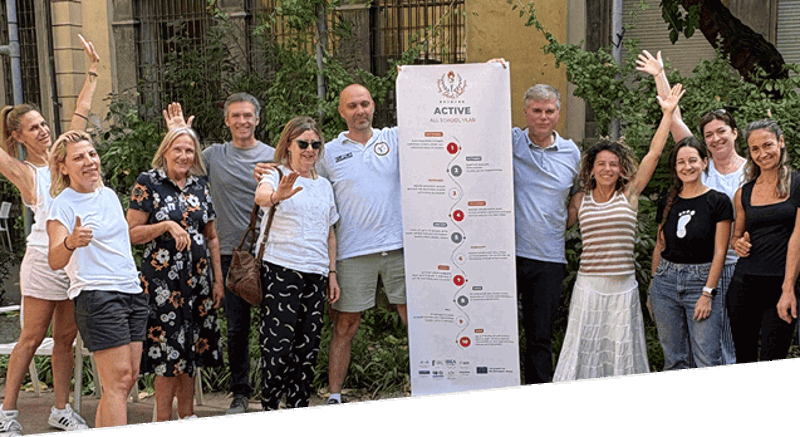
In Asia, Youth Sport Trust International continued to support the development of Jawaan Champions in Pakistan, a new organisation funded by the Rangoonwala Foundation to improve the teaching of physical education and provide opportunities for young people to take part in positive sporting competition.
Further online youth sport leadership courses were also delivered to young Syrian refugees living in camps in Lebanon.
Youth Sport Trust International continued to work with European partners on two projects funded by the European Commission:
For further information, visit Youth Sport Trust International.
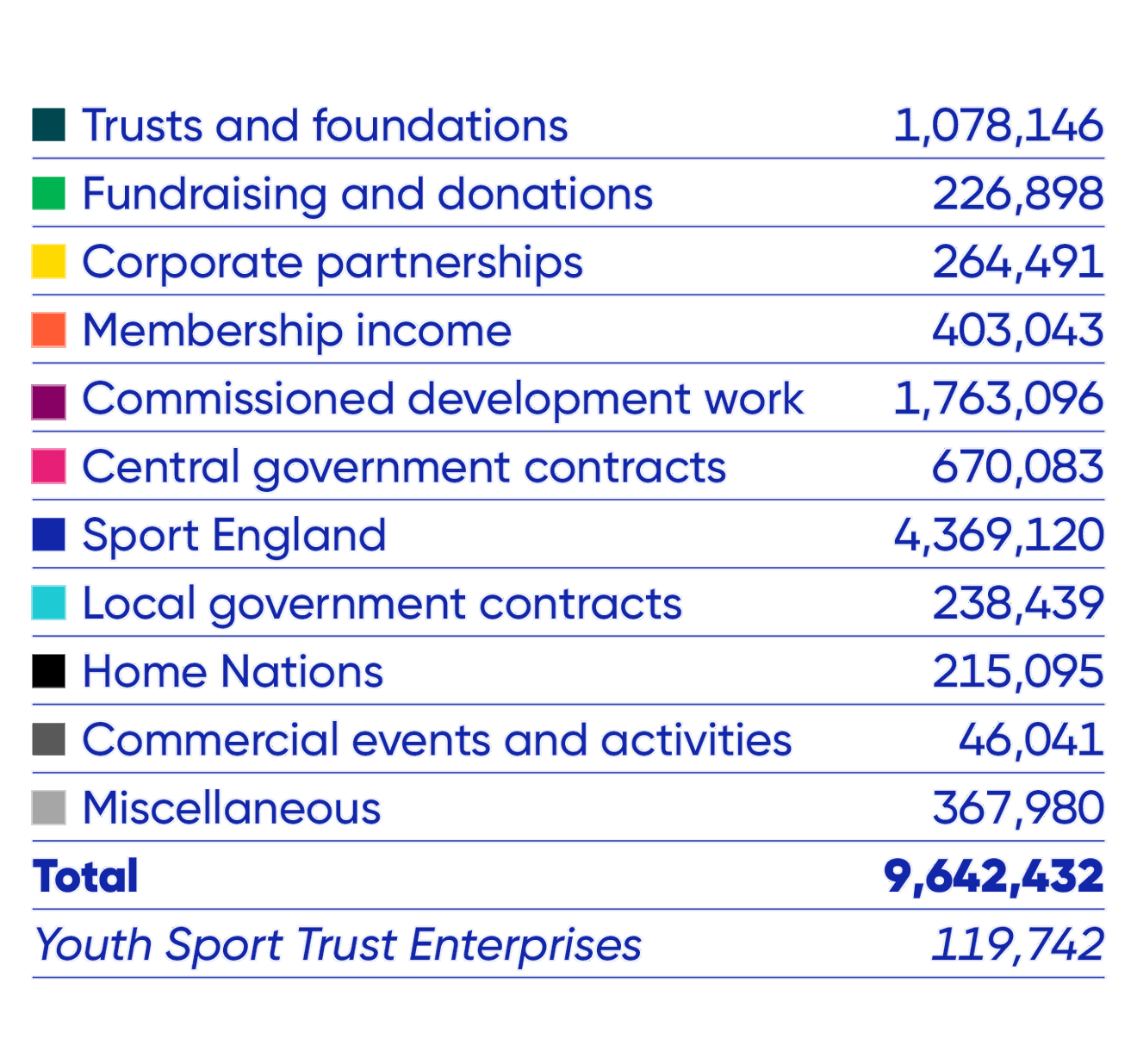
The income below relates to the financial year 2024/25, which ended 31 March 2025.

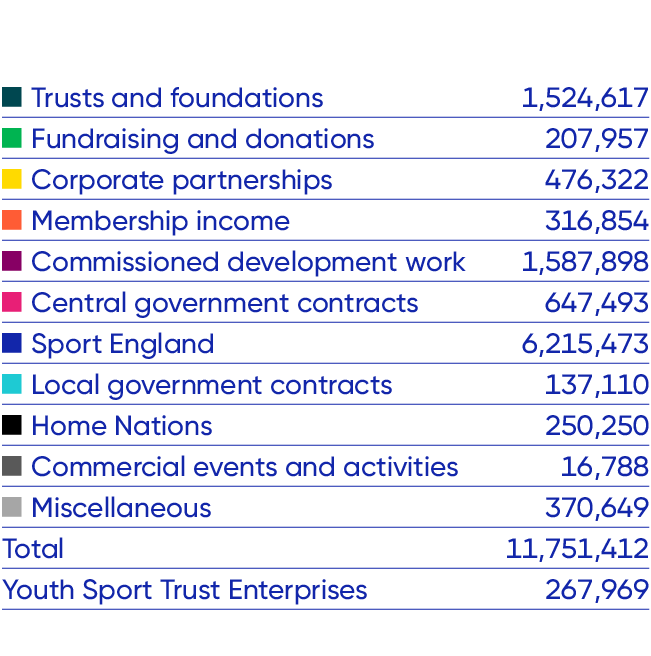
Read our full annual report and financial statement.

Our full annual report and financial statement for 2023/24 is available here.

