
Creating Movement That Matters
The positive benefits of pupils engaging in physical activity are often associated with improved cardiovascular fitness, increased active minutes and stronger overall physical health. However, physical activity offers far more than physical outcomes alone. When embedded meaningfully, movement can play a vital role in improving pupils’ overall wellbeing.
Integrating movement throughout the school day goes beyond achieving whole‑school outcomes. It supports pupils’ happiness, helps to foster a strong sense of belonging within school and contributes to the development of essential lifelong skills as young people grow towards their future aspirations.
Despite this, data from Sport England’s Active Lives survey shows that only 49.1% of young people achieve the recommended 60 minutes of daily physical activity and inequalities become even more pronounced for underserved communities. Activity Alliance’s Play, Move, Belong research highlights that only 3% of disabled young people are active for 60 minutes a day, with 43% moving for less than 30 minutes daily.
Yet research consistently highlights that making lessons more physically active can improve pupils’ attention and engagement, whilst also supporting higher levels of academic achievement. So rather than viewing movement within learning as a distraction; can we use movement as a tool to enhance focus, motivation and learning outcomes?
In a society where one in five young people are experiencing a probable mental health condition, physical activity provides a proven and accessible solution. With regular movement shown to improve self‑perception, confidence and social interaction, all of which may contribute to reducing depressive symptoms among young people. Movement can also support with wider challenges within the classroom environment as behaviour within lessons remains a key challenge for schools, with a recent Teacher Tapp survey indicating that 38% of teachers identify pupil behaviour as a common concern. However, research by Daly‑Smith et al. (2018) suggests that embedding physical activity throughout the school day can lead to noticeable improvements in classroom behaviour.
It is increasingly clear that movement should be embedded as a fundamental aspect of everyday school practice.
To do so effectively we need to rethink how movement is integrated into the existing structure of the school day rather than viewing it as an additional demand. Small, purposeful changes, such as incorporating movement into classroom learning, promoting active transitions, encouraging active travel and maximising opportunities during breaktimes, can have a significant impact.
The 24-Hour Movement Guidelines
The 24-Hour Movement Guidelines shows the importance of the whole day, requiring a team effort between schools and families, and how to balance it effectively for children to have a healthy 24 hours.
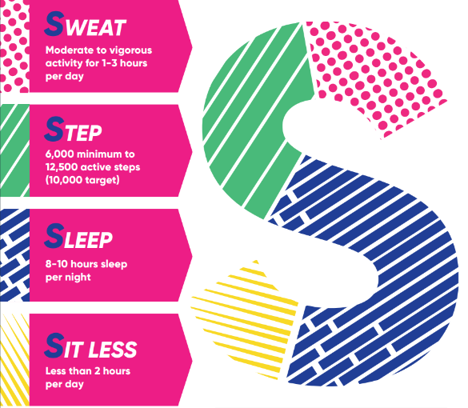
Sweat and Step
Children need different types of movement. School-aged children should get at least 60 minutes of heart-pumping activity each day. In 2026, only 49% of children do enough physical activity to maintain good health and engage positively with school and their local community.
Sit Less
Sitting is a normal part of the day, but long periods of sitting can drain a child's energy. It can also be harmful to their bodies and their minds. The guidelines also suggest limiting recreational screen time to less than two hours a day.
The goal is to break up long sitting blocks with simple movement breaks, such as
- Active breaks: Break up screen time with time outdoors, playing and stretching.
- Active learning: If kids are doing homework, let them read while standing up or moving around the room to answer questions.
Inclusion Tip: Some children need quiet time to handle sensory overload. You can combine rest with gentle movement. Rocking on a sensory swing, stretching on a soft mat, or doing deep breathing exercises can keep them included without overwhelming them.
Sleep Well
A well-rested child is an active child. Sleep gives young bodies the time they need to grow and repair. Children aged 5 to 13 years old need 9 to 11 hours of uninterrupted sleep every night. Younger children need even more, including daytime naps.
By adopting a whole school approach, movement becomes a shared responsibility, embedded consistently across policies, practice and culture, ensuring all pupils can access meaningful opportunities to be active throughout the day.
The Youth Sport Trust has developed a suite of inclusive resources designed to support practitioners in increasing physical activity levels throughout the school day.
To find more information contact [email protected]